
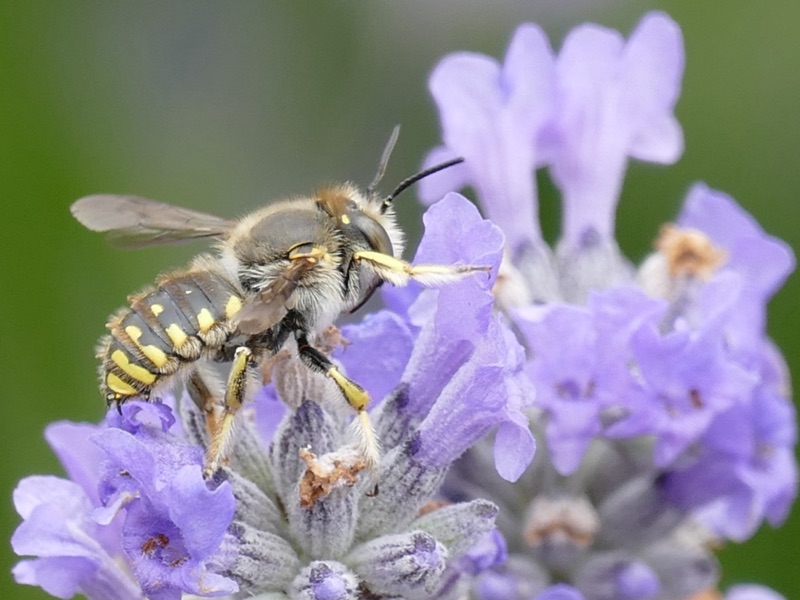
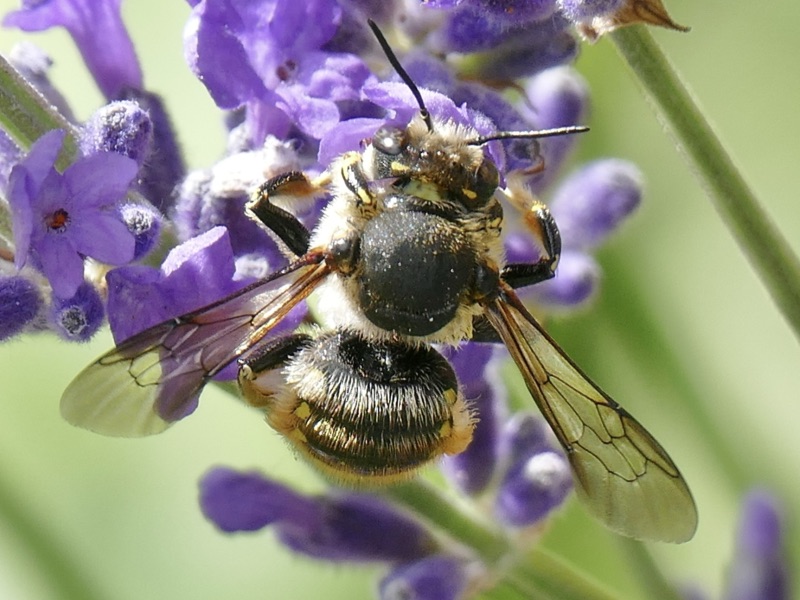
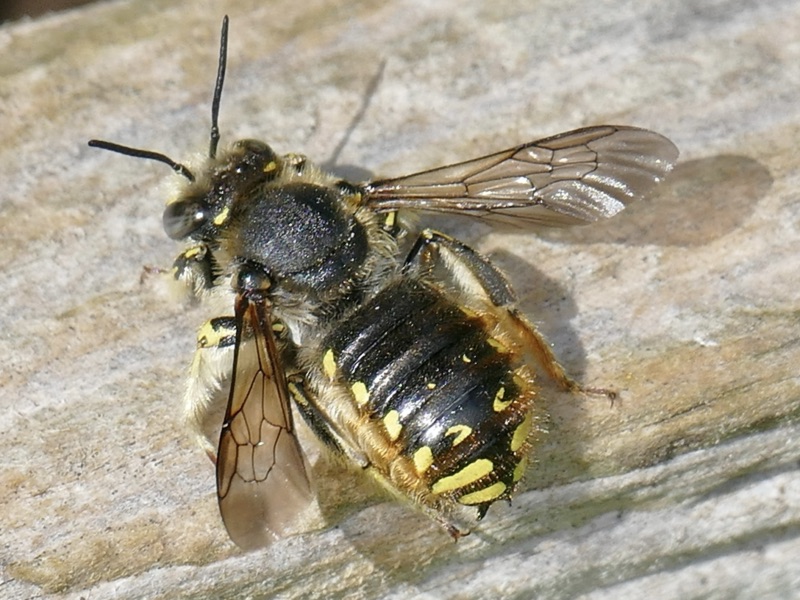
Anthidium manicatum
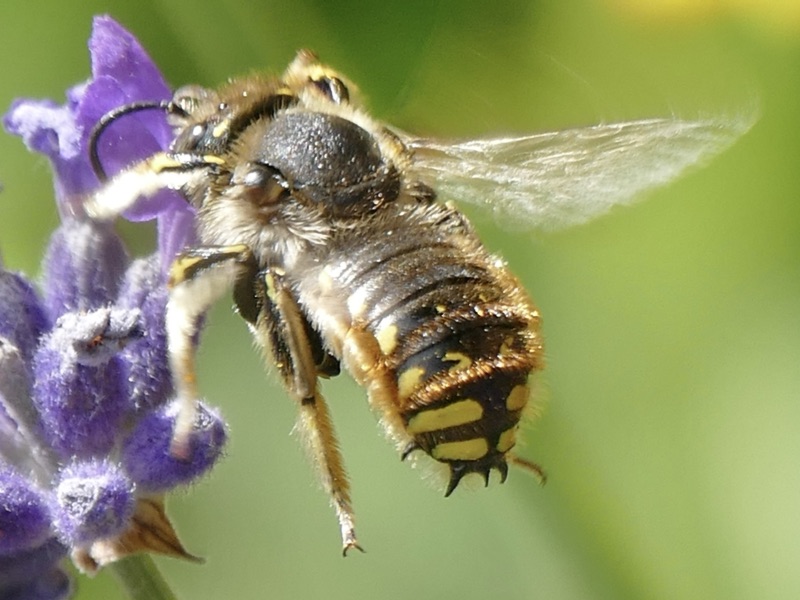
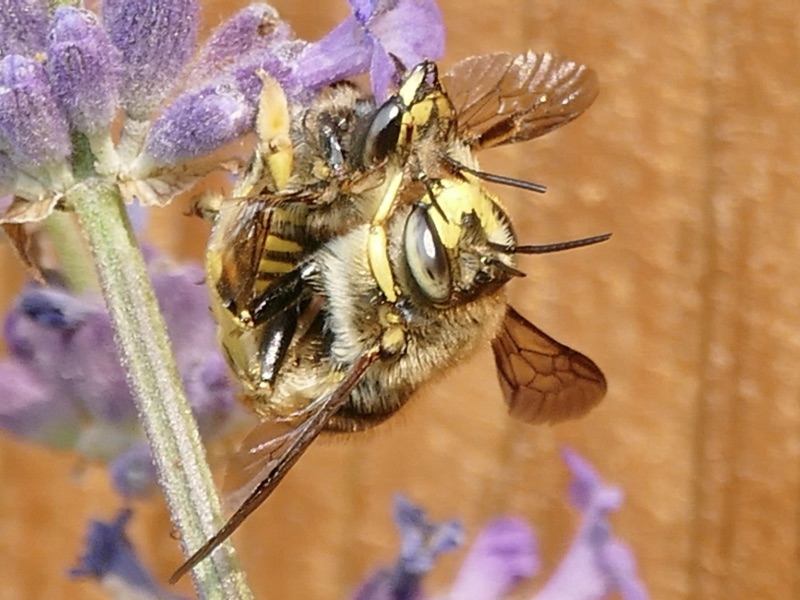
07/31/2016 Heart O' the Hills Area, Olympic National Park, Washington
07/13/2016 Port Angeles, Washington
07/13/2016 Port Angeles, Washington
07/31/2016 Port Angeles, Washington
07/31/2016 Heart O' the Hills Area, Olympic National Park, Washington
European Wool Carder Bees scrape trichomes, hair-like outgrowths on plants, with curved spines on their abdomen. The bees bundle these trichomes and use them to line nests. These bees do not cut leaves or petals as is typical for megachilids. Males are very territorial, chasing other Wool Carder Bee males and other pollinators away. They have a loud and distinctive buzz while flying.
Native to Europe, Asia, and North Africa, European Wool Carder Bees were accidentally introduced into North America from Europe some time in the mid-20th century.